Home / Daylight / Sylvester Stallone
- Film
- Daylight (1996)
- Actor
- Sylvester Stallone
- Character
- Kit Latura
- Watch
- Panerai Luminor (Ref. 5218-201/A)
- Status
- Confirmed
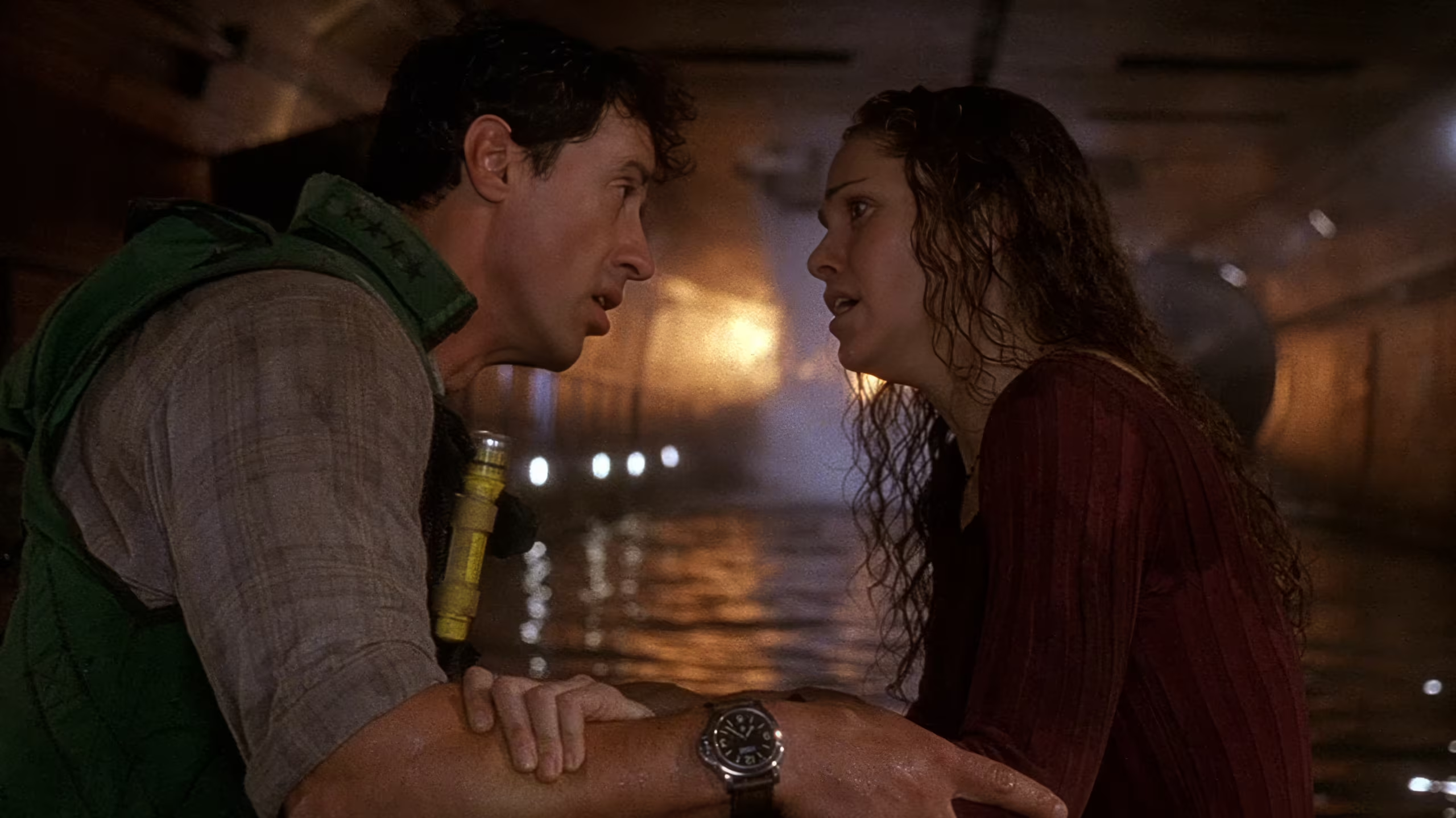
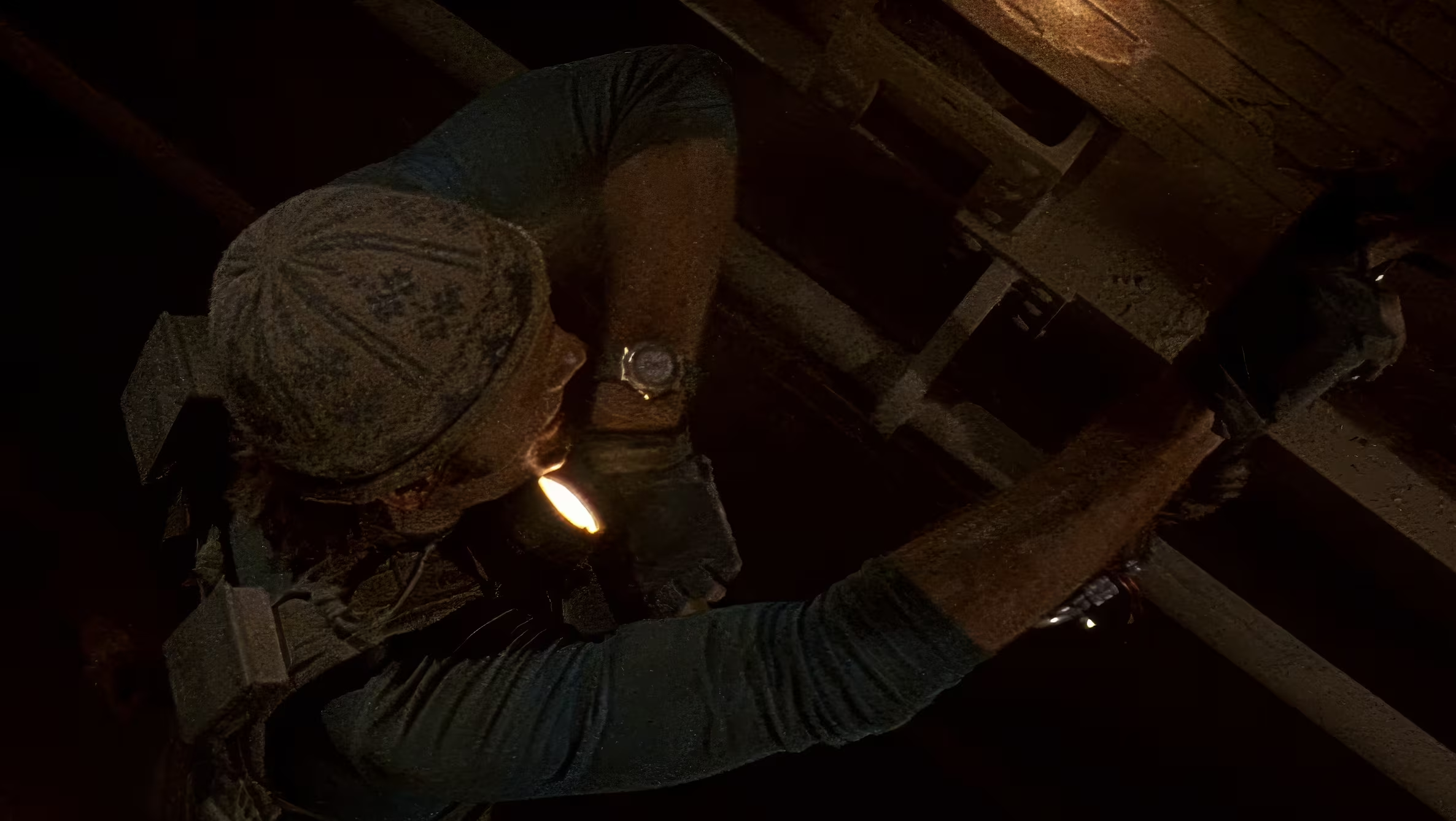
Daylight gave Panerai its first prominent moment on a Hollywood screen, but the story usually told about how it got there is mostly invention. The popular version has Stallone stumbling onto the brand in a Roman shop while filming. He did not. By December 1994, nearly a year before Daylight began shooting, he was already wearing a Panerai Luminor Logo, photographed in one at the Orlando Planet Hollywood opening. The watches had reached him through a Montenegrin photographer named Monty Shadow, who wore a Luminor himself and arranged for several to be passed to Stallone as gifts, sourced through Grimoldi jewellers in Milan. Rob Cohen directed the film, in which an explosion collapses a New York tunnel and Stallone's Kit Latura, a disgraced former EMS chief, leads a handful of survivors out. The Panerai is on his wrist through the dark, flooded rescue.
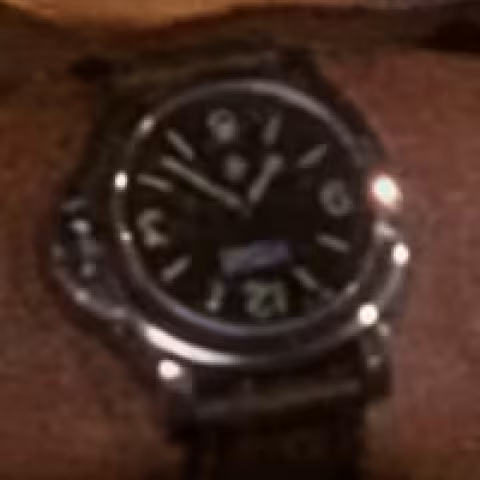
The watch is a Pre-Vendome Luminor Logo, reference 5218-201/A, from the small civilian run Panerai began producing in 1993, before the Vendome group, later Richemont, bought the brand in 1997 and took it global. These early pieces used hand-wound Unitas movements inside the 44mm cushion case with its crown-protecting bridge, a profile derived from the instruments Panerai built for Italian Navy frogmen in the 1940s and 1950s. The sandwich dial, luminous material glowing through a perforated top layer, was engineered for underwater legibility. Special Slytech editions were produced around the film, but they never appeared on screen; what Stallone actually wore was the standard Logo. His own example sold at Phillips in 2020 for 214,200 dollars, with a letter from Stallone attached to the lot.
What is true is the effect. Before Daylight, Panerai was a near-dormant military name with a tiny civilian output and no American presence. Stallone's visibility, on screen and off, turned it into the action-hero watch of the late 1990s, and the brand has traded on that exposure ever since. The arrangement was lopsided: Panerai handed over dozens of watches without a contract or payment, and the cost of that generosity helped push it toward the 1997 sale to Richemont. Every Panerai in an American boutique today traces back, in part, to a tunnel-disaster movie and a watch the brand mostly gave away.
Evidence
3 frames on file
Discussion
No comments yet — be the first to weigh in.