- Film
- Gallipoli (1981)
- Actor
- Mel Gibson
- Character
- Frank Dunne
- Watch
- Unidentified watch
- Status
- Unidentified
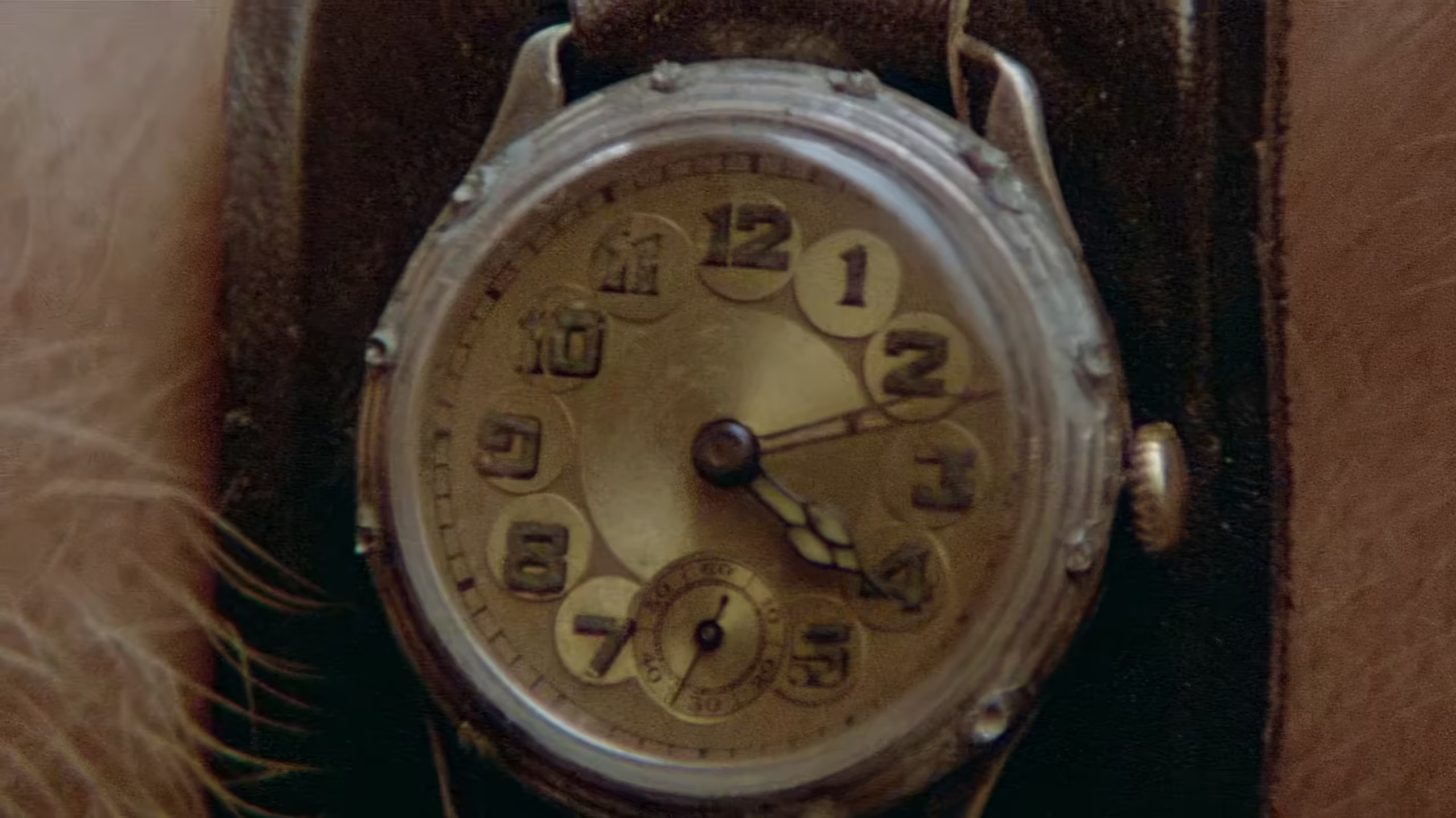
Late in Peter Weir's Gallipoli, the camera leaves the trenches at the Nek and settles, for a few quiet seconds, on a wrist. The shot is a macro insert: a small round watch on a leather backing strap, wrist hair just visible at the edge of the frame. We are in 1915, on the Gallipoli peninsula, where the Australian and New Zealand Army Corps were thrown against Ottoman lines in a campaign that went wrong from the first landing. Mel Gibson plays Frank Dunne, a sprinter from Perth who enlists alongside his friend Archy Hamilton and runs, in the end, into machine-gun fire. Weir lingers on the watch the way he lingers on the men, and the choice is not idle.
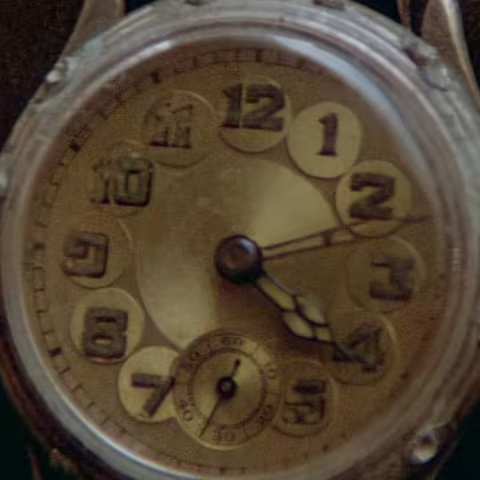
The watch is a textbook trench watch, and the close-up tells you why. The case is small and round, nickel or silver-tone, with a coin-edge bezel and an onion crown set at three. Wire lugs, soldered top and bottom, hold the leather strap, the detail that defined the form: between 1914 and 1918 soldiers wanted both hands free, so makers fitted pocket-watch movements with wire loops and strapped them to the wrist. The cream-gilt dial sets each Arabic numeral in its own circular reserve, with a subsidiary seconds register at six and blued cathedral hands carrying the luminous radium fill that let a man read the time before going over the top. In the frame the hands rest near twenty past three.
The watch carries no maker's name on its dial, so what it is stays unsettled, though what it is exactly of, a 1914-to-1918 trench watch, is not in doubt. Time is the cruelest device in this film. The disaster at the Nek turned on watches that were not synchronised, the artillery barrage lifting minutes before the men climbed out, so the guns fell silent and the assault went in against an enemy fully awake. A working trench watch on a runner's wrist is a loaded prop in a story where mis-set time gets a generation killed.
Evidence
1 frame on file
Discussion
No comments yet — be the first to weigh in.